
3101 W Ridge Rd BLDG C, Greece, NY 14626
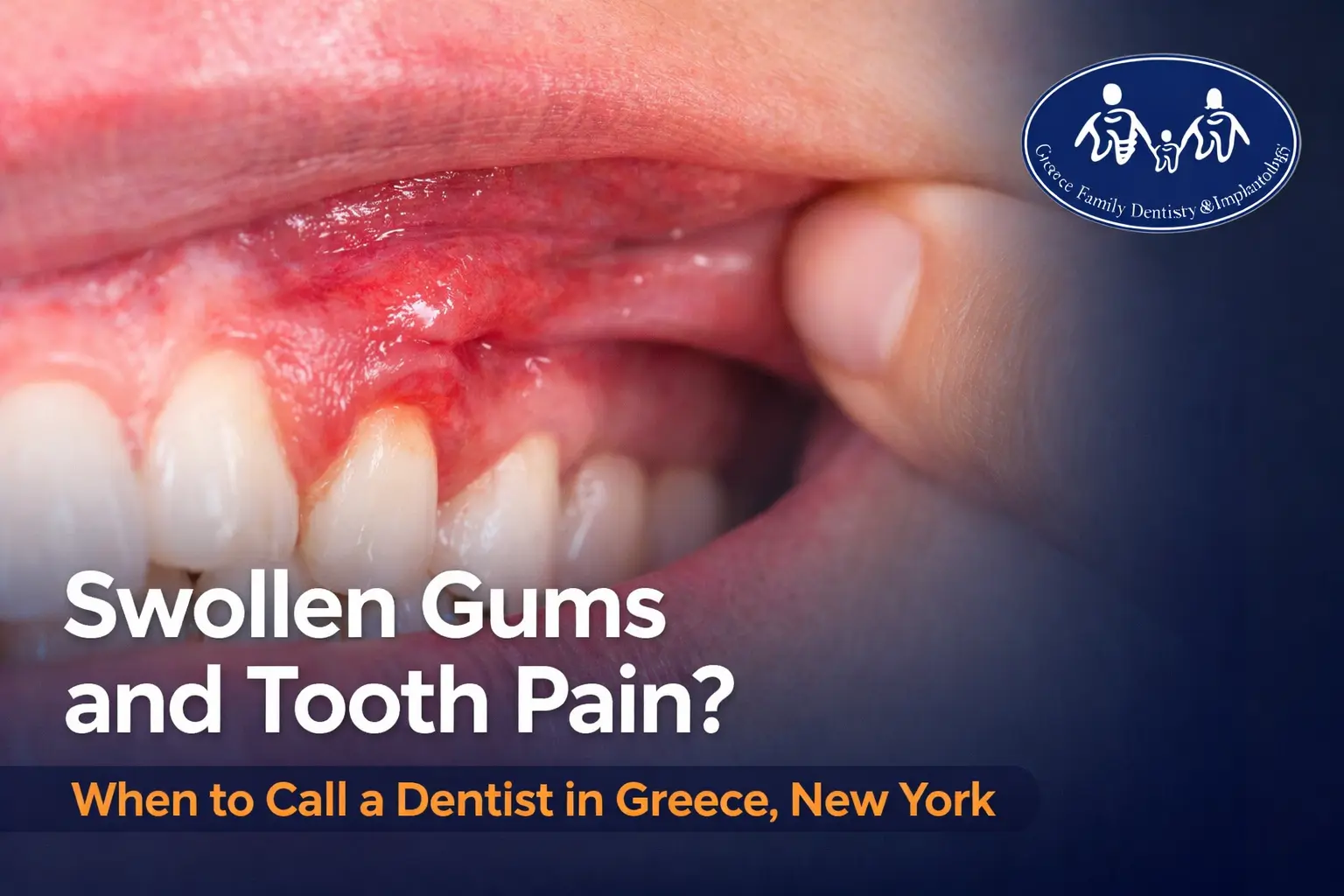
Tooth pain and swollen gums are common dental health issues. However, unlike common symptoms that can signal the flu, other ailments, or indigestion, certain issues don’t just go away with rest. Whether due to poor oral hygiene, gum disease, or a tooth infection, these problems can compound if not properly treated.
Although some discomfort can be managed at home, it’s important to recognize when to call a dentist, as delayed intervention could lead to more serious consequences. In this blog, we’ll dive into the reasons behind swollen gums and tooth pain. We will also learn how to know when it’s time to visit a professional dentist for your oral health.
What is the Cause of Swollen Gums and Tooth Pain?
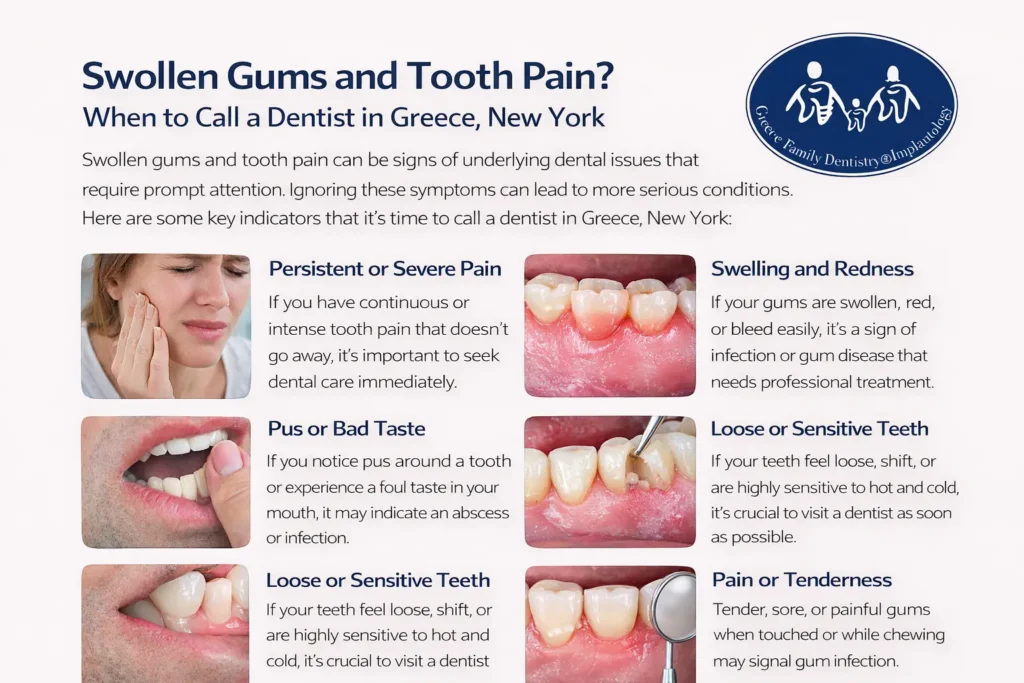
Swollen gums and tooth pain are the most common signs of dental conditions. You may be experiencing pain due to tooth decay, a dental abscess, or a gum infection. Knowing the potential causes can help you manage these symptoms until you see a dentist.
The most common cases of swollen gums and tooth pain:
- Gum Disease: Infected or inflamed gums, gingivitis, or periodontitis can result in swelling, tenderness, and bleeding.
- Tooth Decay: Cavities or untreated decay can cause pain and swelling of the surrounding gum tissue.
- Dental Abscess: A pocket of pus from a bacterial infection can cause severe pain and swelling around a tooth.
- Tooth Injury: If a tooth is injured or damaged, it may begin to swell and hurt.
- Teething or Wisdom Teeth: The eruption of new teeth can cause bouts of tooth pain and temporary gum swelling, especially in younger adults or teens.
Pesky knots in muscle tissue can be difficult to identify; recognizing the source of discomfort is important for the curative process.
When to Visit the Dentist for Tooth Pain & Swollen Gums
And although some discomfort can be soothed with at-home care, there are occasions when a trip to the dental office is in order. Knowing when to call your Greece dentist helps you prevent problems from getting worse and potentially avoid permanent damage.
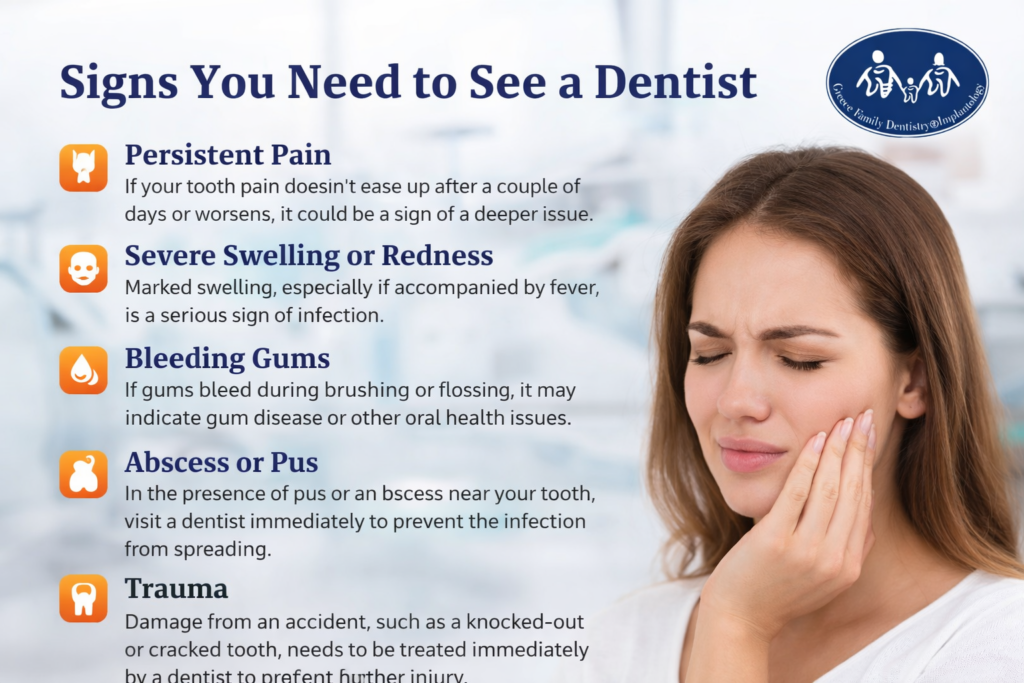
Signs you need to see a dentist:
- Persistent Pain: If your tooth pain doesn’t ease up after a couple of days or worsens, it could be a sign of a deeper issue.
- Severe Swelling or Redness: Marked swelling, especially if accompanied by fever, is a serious signs that infection.
- Bleeding Gums: If gums bleed during brushing or flossing, it may indicate gum disease or other oral health issues.
- Abscess or Pus: In the presence of pus or an abscess near your tooth, you should visit a dentist immediately to have the infection drained to prevent it from spreading.
- Trauma: Damage from an accident, such as a knocked-out or cracked tooth, needs to be treated immediately by a dentist to prevent further injury.
To learn, you should contact a dentist to prevent more serious problems.
What Can a Dentist Do for Swollen Gums and Tooth Pain?
One of the most important aspects of a Greece dentist is in diagnosing and treating dental issues. When you go in, your dentist will conduct a comprehensive evaluation and may run X-rays to gauge the source of your pain and swelling.
Common recovery options recommended by dentists:
- Deep Cleaning: Your dentist might recommend a deep cleaning to treat gum disease, which involves removing plaque and tartar beneath the gum line.
- Root Canal: If the source of the pain is an infection, a root canal may be required to extract the infection and preserve the tooth.
- Antibiotics: Your dentist may prescribe them if you have abscesses or other infections, as they can help reduce swelling and fight the infection.
- Tooth Extraction: Your dentist may need to extract a tooth due to severe decay to prevent further infection.
- Mouthguards or Splints: If you’re experiencing pain from grinding your teeth, your dentist may recommend a custom mouthguard that protects the teeth.
With proper dental treatment from your Greece dentist, you can prevent long-term damage and restore your oral health.
What to Do While Waiting for Dental Care
While waiting to see your dentist, there are home remedies you can use to relieve pain and reduce swelling. These approaches are not a substitute for professional care, but they may help temporarily until you can be seen.
Here’s how to deal with swollen gums and tooth pain:
- Salt Water Rinse: Rinsing warm salt water may relieve inflammation and clean the affected area.
- Cold Compress: Applying a cold compress to your cheek will numb the pain and reduce swelling.
- Non-Steroidal Anti-Inflammatory Drugs (NSAIDs): Over-the-counter pain medications can help reduce the pain and inflammation associated with a sore throat.
- Food Restrictions: Do not consume hot, cold, or sugary foods that might irritate the irritated area.
These remedies may help when needed, but don’t replace a trip to your dentist for proper care.
When to Get Emergency Dental Care
In some cases, your dental issue requires immediate care, especially if it’s due to trauma or infection. Being aware of when to seek emergency dental treatment can help save your tooth and prevent serious complications.
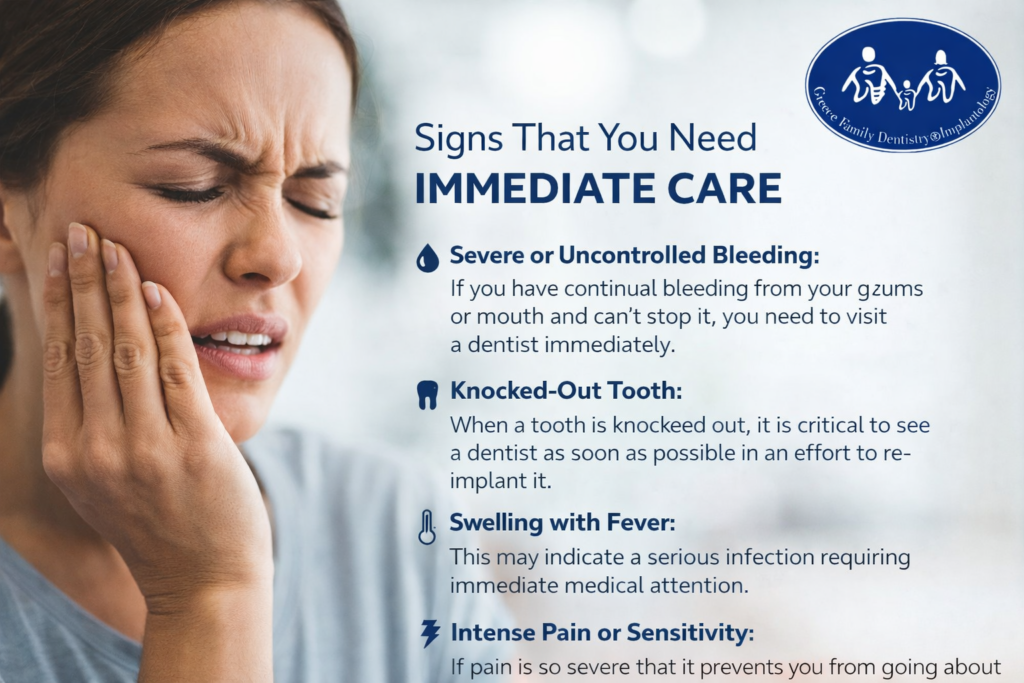
Signs that you need immediate care:
- Severe or Uncontrolled Bleeding: If you have continual bleeding from your gums or mouth and can’t stop it, you need to visit a dentist immediately.
- Knocked-Out Tooth: When a tooth is knocked out, it is critical to see a dentist as soon as possible in an effort to reimplant it.
- Swelling with Fever: This may indicate a serious infection requiring immediate medical attention.
- Intense Pain or Sensitivity: If pain is so severe that it prevents you from going about your daily routine, eating, or drinking, it is a sign of an emergency.
In most cases, seeing your dentist in Greece for emergency care can help prevent more severe injuries and ensure the chances of your tooth’s survival.
Act Fast: Don’t Dismiss Swollen Gums and Tooth Pain
Having swollen gums and tooth pain are immediate signs that something more serious may be developing with your oral health. Neglecting these problems can result in infections, tooth loss, or more invasive treatments later on. Knowing when to seek assistance from your dentist in Greece is important before the situation worsens.
You should always take good care of your mouth! If you are having chronic pain, swelling, or other symptoms, do not hesitate to call Greece Family Dentistry and Implantology today and make an appointment. Receiving treatment quickly sets you up to have a healthy, strong smile for years to come.
Questions People Ask About Swollen Gums and Tooth Pain
Why are my gums swollen?
Swollen gums are commonly caused by gum disease, poor oral hygiene, or food irritants. If swelling lasts more than a few days, visit your dentist to prevent further damage.
How can I relieve tooth pain at home?
You can relieve tooth pain by using over-the-counter pain relievers, applying a cold compress, and rinsing with warm salt water. However, a dental visit is necessary for long-term relief.
What is a dental abscess?
A dental abscess is a collection of pus caused by an infection, often leading to swelling and intense pain. Treatment typically involves draining the abscess and antibiotics to prevent the infection from spreading.
When should I go to the emergency dentist?
If you have severe tooth pain, bleeding gums, an abscess, or trauma to your mouth, you should seek emergency dental care immediately to prevent further complications.
Can gum disease cause tooth pain?
Yes, gum disease can lead to tooth pain as the infection spreads deeper into the gums and teeth. Early intervention can prevent tooth loss and further infection.
What should I do if my tooth is knocked out?
If your tooth is knocked out, keep it moist by placing it in milk or water and seek immediate dental care. Prompt re-implantation can increase the chances of saving the tooth.