
3101 W Ridge Rd BLDG C, Greece, NY 14626
Gentle, Precise Care for Wisdom Tooth Removal
Wisdom teeth — the last molars to develop — usually emerge between ages 17 and 25. While many people hope to keep all their teeth, wisdom teeth often don’t have enough room to come in properly. When they become impacted or cause pain, infection, or other dental issues, removal is the safest and most effective option. Wisdom teeth extractions at GFD Implantology are performed using advanced imaging and thoughtful, gentle techniques to reduce discomfort and support smooth healing.
Schedule Your Wisdom Teeth Consultation
What Are Wisdom Teeth?
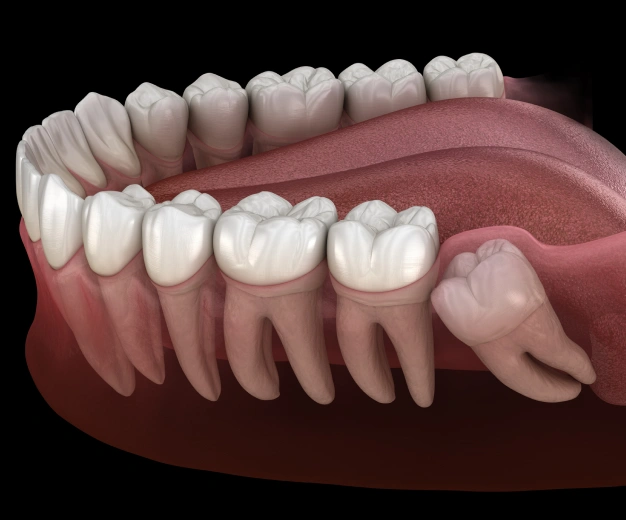
Third molars — commonly called wisdom teeth — are located at the very back of the mouth on the top and bottom arches. They typically appear between the late teens and early twenties. Because most mouths are designed for 28 teeth, these extra molars often lack adequate space, leading them to become impacted or misaligned. Impaction occurs when a tooth fails to fully erupt and can be trapped in the jawbone or gums, potentially causing pain or complications.
Why Wisdom Teeth May Need Extraction
- Pain or Discomfort: Wisdom teeth that push against neighboring teeth or emerge improperly can cause ongoing jaw or gum pain.
- Infection: Food and bacteria trapped under gum tissue around a partially erupted tooth can lead to repeated infections.
- Damage to Nearby Teeth: Impacted wisdom teeth can contribute to decay or gum disease in adjacent second molars.
- Cysts or Growths: In rare cases, fluid‑filled cysts or other growths can form around impacted teeth and damage bone.
- Swelling or Gum Problems: Difficulty cleaning around wisdom teeth can lead to chronic inflammation, swelling, and tenderness.
Removing problematic wisdom teeth early can prevent more advanced issues and help maintain your long-term oral health.
How Wisdom Teeth Extractions Work
Wisdom teeth removal is a common outpatient surgical procedure performed under local anesthesia, intravenous (IV) sedation, or general anesthesia — depending on your needs and the complexity of the case.
Here’s what to expect:
Careful Evaluation & Imaging: We use panoramic or digital X‑rays (and Cone Beam CT when needed) to map the position of wisdom teeth and nearby structures to ensure safe planning.
1
Comfort‑Focused Surgery: With appropriate anesthesia, the affected teeth are gently removed. If sedation is chosen, you'll remain relaxed and unaware throughout the procedure.
1
Advanced Techniques: Our approach minimizes bone and tissue trauma to reduce post‑operative swelling, discomfort, and recovery time. When indicated, collagen socket grafting is used to support healing and preserve bone.
1
Post‑Operative Care: You’ll be released with tailored aftercare instructions, and if needed, medications to help manage pain and inflammation as you heal.
1
Most patients recover on the same day of surgery without the need for overnight stays.