
3101 W Ridge Rd BLDG C, Greece, NY 14626

Chronic headaches rank among the most common health complaints, and for many of us, their triggers are elusive. If you regularly experience headaches, it can seem like your options for lasting relief are dwindling. While stress, poor posture, and dehydration are some of the more common culprits for your headaches, there may be an under-the-radar cause contributing to your pain: TMJ disorder. TMJ or temporomandibular joint dysfunction is a condition of the jaw joint and can actually lead to chronic headaches, surprisingly many.
If you live in Greece, New York, and have been struggling with chronic headaches for long periods that dont respond to conventional treatments, TMJ treatment might be right for you. In this blog, you will learn how this therapy works and if it might help you finally bid adieu to your chronic headaches for good.
What is TMJ, and How Does It Relate to Chronic Headaches?
TMJ stands for temporomandibular joint, which joins your jawbone to your skull. This joint is critical for activities such as speaking, eating, and swallowing. When something goes wrong with this joint, it can cause a laundry list of symptoms called TMJ, from jaw pain and clicking sounds in your mouth to headaches, earaches, and neck pain.
For many TMJ disorder sufferers, chronic headaches are the most alarming symptom. Headaches related to TMJ frequently appear as tension headaches, which feel like a band of tightness around your head, or migraines, which tend to be more severe and might include nausea and sensitivity to light. For some people with TMJ disorder, headaches can occur as often as several times per week.
How TMJ Disorder Can Cause Headaches
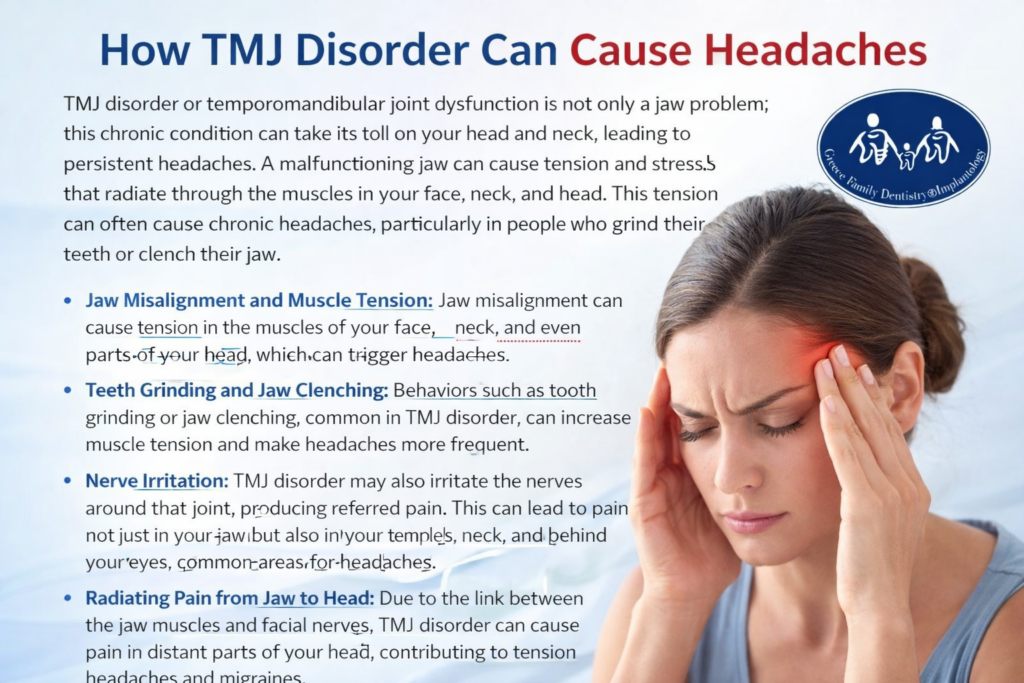
TMJ disorder or temporomandibular joint dysfunction is not only a jaw problem; this chronic condition can take its toll on your head and neck, leading to persistent headaches. A malfunctioning jaw can cause tension and stress that radiate through the muscles in your face, neck, and head. This tension can often cause chronic headaches, particularly in people who grind their teeth or clench their jaw.
Here’s a look at how TMJ disorder can amplify headache pain:
- Jaw Misalignment and Muscle Tension: Jaw misalignment can cause tension in the muscles of your face, neck, and even parts of your head, which can trigger headaches.
- Teeth Grinding and Jaw Clenching: Behaviors such as tooth grinding or jaw clenching, common in TMJ disorder, can increase muscle tension and make headaches more frequent.
- Nerve Irritation: TMJ disorder may also irritate the nerves around that joint, producing referred pain. This can lead to pain not just in your jaw but also in your temples, neck, and behind your eyes, common areas for headaches.
- Radiating Pain from Jaw to Head: Due to the link between the jaw muscles and facial nerves, TMJ disorder can cause pain in distant parts of your head, contributing to tension headaches and migraines.
- Hidden Cause of Chronic Headaches: If you have chronic headaches, TMJ disorder may be the cause. Specific treatment for jaw dysfunction can alleviate both the symptoms and the pain associated with tension-type headache.
How TMJ Treatment Can Help Your Chronic Headaches?
The goal of TMJ treatment in Greece, NY, is to relieve the tension that can build up in the joint and create muscle knots; relieving those muscle knots will also help alleviate chronic headaches. Because there are different severities of TMJ disorder, your treatment plan will depend on how severe yours is. Some common approaches include:
- Mouthguards or Splints: These custom-fitted appliances are worn at night to realign your jaw and minimize the effects of teeth grinding or clenching, which is a significant factor in TMJ-related headaches.
- Physical Therapy: Specific exercises and stretches can improve jaw mobility and reduce muscle tension around the joint, which could alleviate headache symptoms.
- Heat and Cold Therapy: Applying heat or cold to the jaw muscles reduces inflammation and alleviates the pain that often contributes to headaches.
- Medications: Oral anti-inflammatory medications or muscle relaxants are sometimes prescribed to decrease swelling and any muscle spasms in the jaw area, which can help alleviate headaches.
- Stress Management: As stress can contribute to both TMJ disorder and headaches, stress-management techniques, such as relaxation exercises or mindfulness, may also help.
TMJ treatment can not only help you manage the discomfort caused by jaw dysfunction but also greatly reduce the frequency and intensity of chronic headaches by addressing the root cause.
Signs You Might Have TMJ Disorder
If you are suffering from chronic headaches, it’s essential to identify if the TMJ disorder is responsible. Some common symptoms include:
- Jaw pain or tenderness
- A clicking or popping sensation in the jaw when moving it
- Limited jaw movement
- Pain in or around the ears
- Frequent headaches that are migraines or tension types
- Neck, shoulder, or back pain
- Bruxism (grinding or clenching teeth)
- A feeling of the jaw hanging up or sticking
If you have these symptoms in addition to your chronic headaches, it may be a good time to consider TMJ treatment.
How TMJ Treatment Can Enhance Your Well-Being
Chronic headaches can be much more than physical discomfort; they can enter your daily life, ruining work activities, complicating social interactions, and making even simple tasks harder. A TMJ treatment gets to the core of your headaches rather than just alleviating pain. TMJ therapy can greatly enhance your quality of life by restoring proper jaw alignment and reducing muscle stress. This is the way it can elevate your quality of life:
- Less Frequent and Severe Headaches: TMJ treatment can reduce the occurrence and severity of recurrent headaches, a huge relief for people suffering from tension headaches or migraines.
- Better Sleep: TMJ therapy also reduces jaw pain and tension, leading to better sleep because patients with a misaligned jaw can sleep more soundly without constant discomfort.
- Reduced Jaw Pain: After treatment, many TMJ patients notice less jaw pain and greater ease with chewing, talking, and even smiling.
- Improved Jaw Mobility: TMJ treatment helps restore jaw mobility, alleviating stiffness in the area and enabling more comfortable transitions during day-to-day activities such as speaking or eating.
- Enhanced Overall Well-Being: This is because, without as much pain and discomfort, you can lead a more active life, socialize, and feel more energetic and positive throughout your day.
If you live in Greece, New York, and have been suffering from chronic headaches, TMJ treatment can be a lifesaver that will not only help your body but also make your life much more enjoyable.
Start Your Journey to Relief Today
Then TMJ treatment in Greece is for you if you’re tired of standard treatments, but have attempted others and failed to have your headaches go away. Are you currently searching for relief from TMJ disorder or related headaches? Our team at Greece Family Dentistry and Implantology is here to help! We focus on the origins of your suffering, helping you lead a more enjoyable life free from those headaches.
Call us today to book an appointment and take the next step toward a headache-free future. Take back control of your life from TMJ disorder.
Questions People Ask About TMJ Treatment
What is TMJ disorder?
TMJ disorder affects the temporomandibular joint, connecting the jaw to the skull. It can cause pain, jaw dysfunction, difficulty chewing, and headaches, impacting daily activities and overall comfort.
Can TMJ treatment stop my headaches?
Yes, TMJ treatment can relieve muscle tension and improve jaw alignment, reducing the frequency and intensity of chronic headaches associated with jaw dysfunction and tension.
How do I know if TMJ is causing my headaches?
If you feel jaw pain, clicking when moving your mouth, or neck tension along with your headaches, it could be related to TMJ disorder. Consulting a professional can help confirm the cause.
What are the treatment options for TMJ disorder?
Treatment options for TMJ include custom mouthguards, physical therapy, stress management, heat and cold therapy, medications, and lifestyle adjustments, all designed to reduce discomfort and improve jaw function.
Is TMJ treatment effective for all types of headaches?
TMJ treatment is most effective for headaches caused by jaw dysfunction, like tension headaches or migraines. It may not relieve headaches caused by other underlying conditions, such as sinus or cluster headaches.
How long does it take to see results from TMJ treatment?
Many patients feel relief within a few weeks of starting TMJ treatment, though the exact timeline can vary depending on the severity of the condition and the chosen treatment approach.